

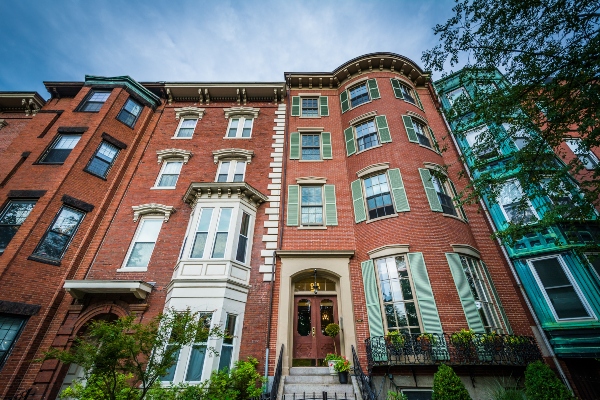
 Short answer: For most buyers, yes — and the reason isn't the brownstones, the restaurants, or the tree-lined blocks everyone talks about. It's the price gap. The South End still trades at a meaningful discount per square foot to Back Bay and Beacon Hill while delivering the same proximity to the core of Boston. That gap is the opportunity, and it has been narrowing, not widening.
Here's the part the typical neighborhood guide skips: the South End is not "up-and-coming." It arrived years ago. The investment thesis today isn't discovery — it's a value spread that hasn't fully closed.
Why the South End trades below Back Bay (and why that's the point)
On a price-per-square-foot basis, comparable South End condos have historically sold below Back Bay equivalents despite sitting only blocks apart. Some of that discount is real — Back Bay's Comm Ave and Marlborough blocks carry a prestige premium and a denser concentration of full-service buildings. But a large share of the gap is simply legacy perception that hasn't caught up to the neighborhood as it actually is now.
When two adjacent neighborhoods offer similar walkability, similar architecture, and similar access to the Back Bay and Orange Line corridors, large per-square-foot gaps tend to compress over time. The South End is the cheaper side of that trade.
Pricing relationships shift quarter to quarter — confirm current South End and Back Bay $/SF against live MLS PIN data before relying on any specific figure.
What you're actually buying in the South End
- Architecture with leverage. Bowfront brick rowhouses, high ceilings, and original detail. Restored units command premiums; unrenovated ones offer a value entry with upside.
- A genuine dining and gallery core. The SoWa district, Tremont and Washington Street corridors, and the Sunday market are demand drivers, not amenities you'll use twice a year.
- Real transit access. Back Bay Station (commuter rail + Orange Line) and multiple Orange Line stops put downtown and the suburbs within easy reach.
Who the South End is right for
It fits buyers who want Back Bay-level location and character without paying the Back Bay headline price, and who are comfortable trading some full-service-building density for rowhouse-style living. It's especially strong for buyers willing to take on a unit that needs cosmetic work — that's where the value spread is widest.
It's a weaker fit if you specifically need a large doorman high-rise with a gym and garage on-site; those are more concentrated in Back Bay and the Seaport.
The counterintuitive risk to watch
The biggest mistake South End buyers make isn't overpaying for the neighborhood — it's overpaying for a specific unit in a small historic condo conversion without scrutinizing the association. A beautiful 5-unit brownstone conversion with a thin reserve fund and deferred facade work can erase your "discount" the first time the building needs a roof or masonry repointing. Location is the easy part. The building's books are where deals are won or lost.
FAQ
Is the South End more expensive than Back Bay? Generally no. On a per-square-foot basis the South End has typically traded at a discount to Back Bay, though the gap has been compressing. Verify current figures against MLS PIN.
Is the South End a good investment? For buyers seeking core-Boston location at a relative discount, it has a strong case. The thesis rests on the value spread to adjacent premium neighborhoods continuing to narrow.
Is the South End safe and walkable? It's one of Boston's most walkable neighborhoods, anchored by dense retail, dining, and transit. As with any urban area, conditions vary block to block.
What kind of homes are in the South End? Predominantly Victorian-era brick rowhouses, many converted into condominiums, plus newer boutique developments.
Thinking about the South End? Remmes & Co. is a Back Bay-based brokerage that lives in this market every day. We'll show you where the real value sits — and which buildings to walk away from. Reach Chris Remmes at (617) 398-0015 or chris@remmesco.com.