
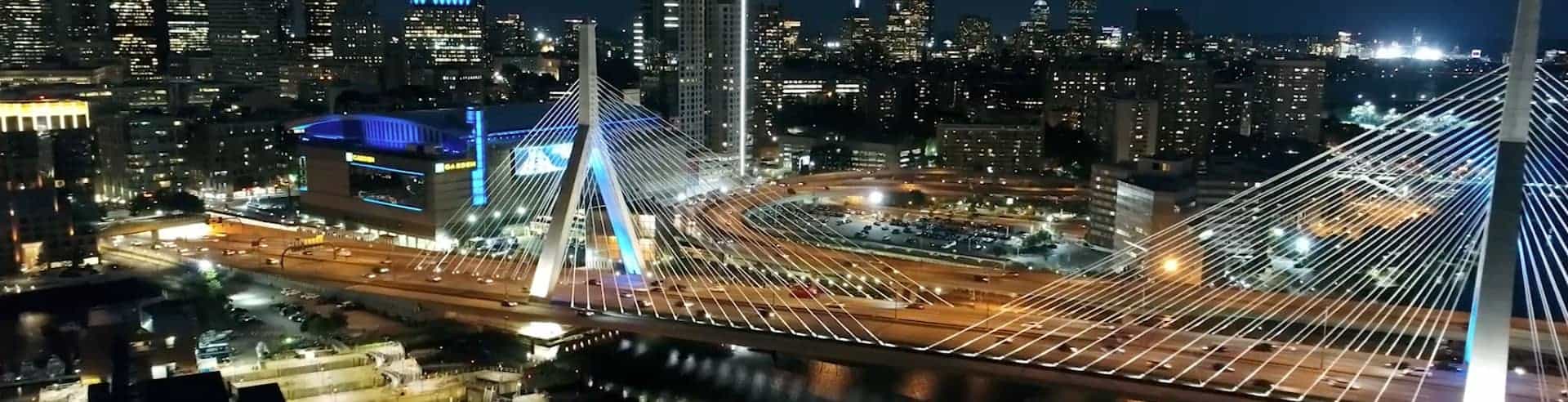
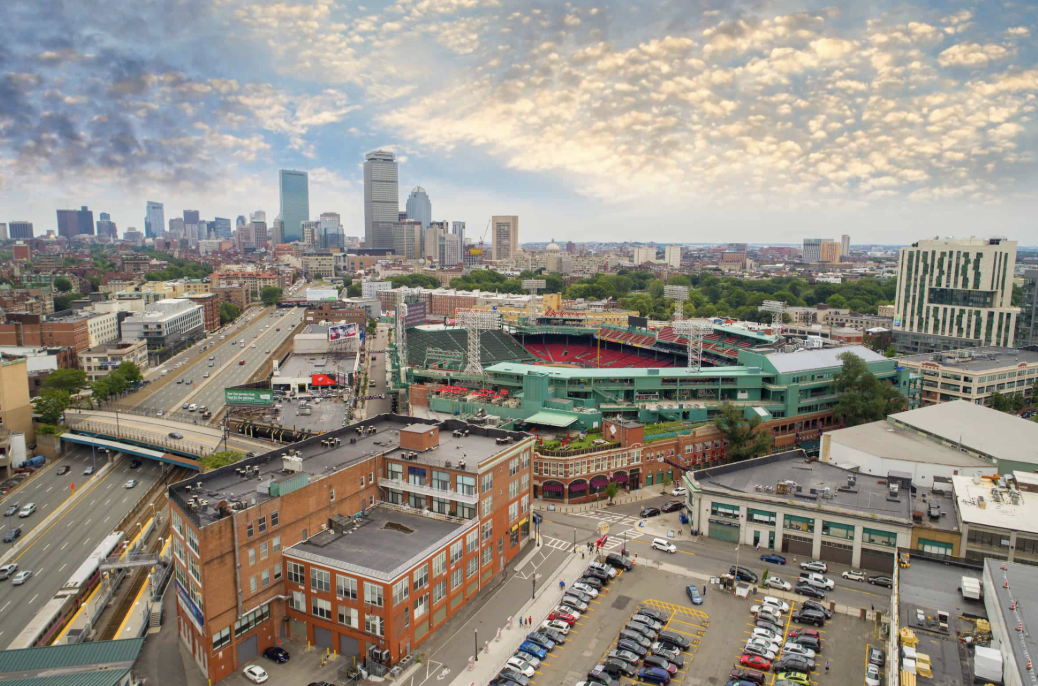
 When I started selling real estate in Fenway two decades ago, half my showings ended with the same question: "Are you sure this is safe at night?"
I haven't heard that question in years.
The Fenway I cut my teeth in is not the Fenway you walk through today, and the gap between those two versions of the neighborhood is where most of the opportunity — and most of the misconceptions — still live. If you're thinking about buying, selling, or investing here, it helps to know what actually changed, what didn't, and what that means for the next five years.
The Fenway I started in
Back then, Fenway was a student neighborhood with a baseball stadium attached. Boylston Street west of Mass Ave was mostly auto body shops, parking lots, and the occasional dive bar. Lansdowne Street emptied out the second the Sox left town. The Pierce, the Viridian, the Trilogy — none of it existed. Van Ness Street wasn't really a street anyone walked down on purpose.
The condo inventory was almost entirely brownstone conversions on Gainsborough, Hemenway, Peterborough, and Queensberry. One-bedrooms traded in the high $200s. Investors were nervous about the rental ceiling. Owner-occupants worried about resale.
The buyers I worked with then were almost all in one of three buckets: Berklee or Northeastern parents buying for their kids, young hospital workers from Longwood, and a small but stubborn group of people who'd figured out before everyone else that this neighborhood was about to pop.
What actually changed
People love to credit Fenway Park's renovations or the Red Sox's success for the transformation. Those mattered. But the real shift was three things happening at once:
The zoning got rewritten. The Fenway Center, Pierce, and Van Ness projects didn't just add buildings — they redefined what kind of buildings could exist here. Once you had Class A residential towers, the rest of the corridor had to follow.
Longwood kept growing. Boston's medical district added thousands of high-income workers who didn't want to commute from the suburbs and couldn't afford Back Bay. Fenway was the obvious answer.
The restaurant scene flipped. When Sweet Cheeks, Tasty Burger, and eventually Time Out Market arrived, the neighborhood stopped being a place you left for dinner.
What didn't change
Here's where most outside observers miss the story. A lot of Fenway is still exactly what it was.
The brownstones on Gainsborough, Hemenway, and Peterborough still look the same. The condo associations are still small and self-managed. The students still rent on the Queensberry side. Symphony Hall still owns the corner. The Fens still flood when it rains hard.
This matters because the "new Fenway" narrative gets people focused on the towers, and the towers are not where most of the value is. The brownstone condo at $645K I just closed on Gainsborough trades in a fundamentally different market than the $1.2M unit at the Pierce — different buyers, different absorption rates, different appreciation curves. Confusing the two costs people money.
What I'd tell someone buying here today
If you take nothing else from 20 years of watching this neighborhood: Fenway is not one market. It's at least three, maybe four, depending on how you count.
The Gainsborough/Hemenway brownstone market is steady, owner-occupant heavy, and rewards patience. The Van Ness/Boylston tower market is amenity-driven and moves with the broader luxury condo cycle. The Queensberry side is still investor and student-rental dominated. And the edges that touch Audubon Circle and Mission Hill behave like their own thing entirely.
Buyers who do well here pick a sub-market and learn it deeply. Buyers who get burned treat "Fenway" like a single ZIP code.
Where I think it's heading
The next decade isn't going to look like the last one. The big infill development is largely done. The next round of appreciation has to come from somewhere else — and my bet is on the brownstone stock quietly catching up to the towers as more buyers realize that prewar charm at $700-900/sqft is a better trade than glass-and-steel at $1,400.
That's not a prediction I'd have made 20 years ago. But it's the one I'm watching now.