

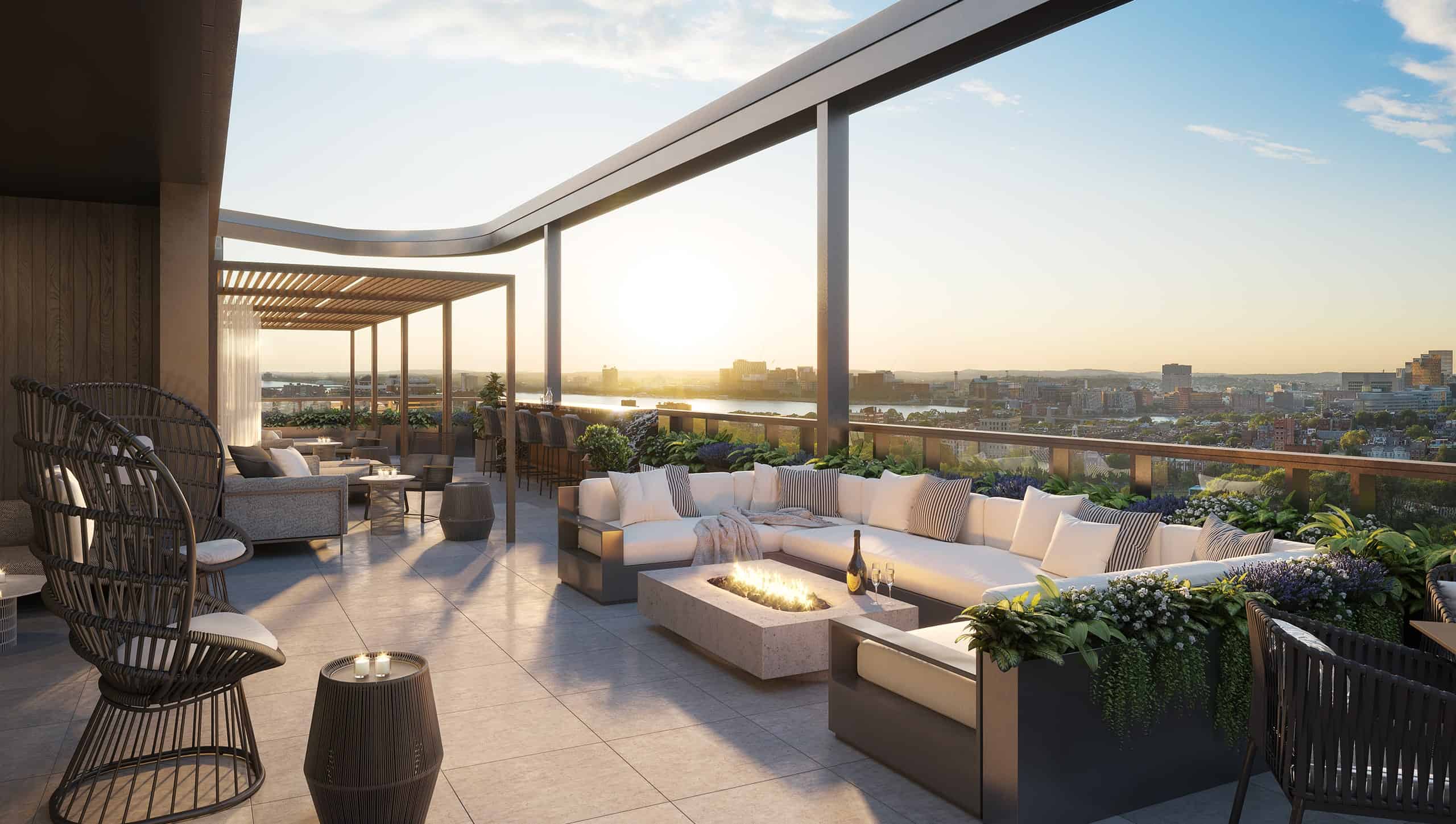
 Walk through any South End brownstone listing or Back Bay penthouse and you'll see the same line item: "rooftop access" or "potential for roof deck." That word potential is doing an enormous amount of work. In Boston, a roof deck that already exists, is permitted, and has a certificate of occupancy is a fundamentally different asset than a roof you might one day be allowed to build on. The gap between the two is routinely $200,000 to $500,000 in real transaction value — and most buyers don't understand why until they try to build their own.
Why Boston is different
Most cities let you treat your roof like your backyard. Boston does not. Between the BPDA (Boston Planning & Development Agency), the Inspectional Services Department, and a patchwork of neighborhood architectural commissions, building anything on a Boston roof is a multi-year regulatory exercise. In Back Bay, the Back Bay Architectural Commission has jurisdiction. In Beacon Hill, the Beacon Hill Architectural Commission. In the South End landmark district, the South End Landmark District Commission. In Bay Village, Charlestown's historic blocks, and parts of the Fenway, similar bodies apply. Each one has its own rules about visibility from the street, materials, railing heights, setbacks, and pergola structures.
Even outside the landmark districts, Article 80 review can apply to additions of meaningful size, and abutter notification can drag a project out for a year or more before a single board is poured.
The point is not that roof decks are impossible. The point is that they take eighteen to thirty-six months, six figures in legal and architectural fees before you've laid a plank, and a tolerance for neighbor opposition that not every buyer possesses. An existing, permitted, signed-off roof deck shortcuts all of it.
What "approved" actually means
This is where listing language gets sloppy and where good buyer's agents earn their fee. There is a spectrum:
A roof deck that was built with permits, passed final inspection, and has a recorded certificate of occupancy is the cleanest scenario. Buyer takes ownership of a fully legal structure. No exposure.
A roof deck built with permits but never closed out — meaning construction happened but no final inspection — is a yellow flag. The current owner has been living with it, but a future buyer's lender or inspector can flag the open permit, and rectification may require structural changes to bring it into current code.
A roof deck built without permits is a problem the seller usually hopes the buyer won't catch. These exist in Boston in larger numbers than people admit. The risk transfers to the new owner: cease-and-desist orders, retroactive permitting at modern code (which has gotten stricter on egress, railing height, and load), or in worst cases, mandatory removal.
A roof with "head house" already built — the small structure that houses the staircase up to the roof — is partially down the path. Adding the deck around an existing head house is far easier than building both.
A flat roof with no access, no permit history, and no precedent in the building is the longest, riskiest path. This is what most "potential for roof deck" listings actually mean.
The neighborhood-specific math
In the South End, where rowhouses are tall and the street wall is uniform, an approved roof deck with views toward downtown is a transformative amenity. Comparable units with and without permitted decks routinely show $250,000 to $400,000 gaps at the $2M to $4M price point.
In Back Bay, the math is more complicated because the architectural commission limits what's visible from the street. A deck that's set back far enough to be invisible from Commonwealth or Marlborough is approvable; one that breaks the cornice line is not. Existing approved decks here, especially with Charles River or Hancock views, command outsized premiums.
In Beacon Hill, roof decks are the rarest of all. The architectural commission's tolerance for visible rooftop modification is essentially zero on the federal and Greek Revival streets. The few approved decks that exist on lower-profile blocks trade as genuine trophies.
How to read a listing
If a luxury Boston listing claims a roof deck, ask for the permit history. The seller's agent should be able to produce the building permit, the certificate of occupancy, any architectural commission approvals, and any abutter sign-offs. If they can't, what you're buying is not a roof deck — it's a liability that happens to have furniture on it.
If a listing claims "potential for roof deck," interpret that as: someone might be able to build one in two to four years, after spending $100,000 to $250,000 in soft costs and legal fees, with no guarantee of approval. Price the property as if no deck exists, because for most realistic timeframes, no deck does.
In a luxury market where buyers are increasingly time-poor and tolerance for renovation friction is at an all-time low, an existing approved roof deck is one of the few features that can't be added quickly with money. That scarcity is what makes it a quiet, durable difference-maker — and what makes it worth pricing into every comparable analysis you run.