
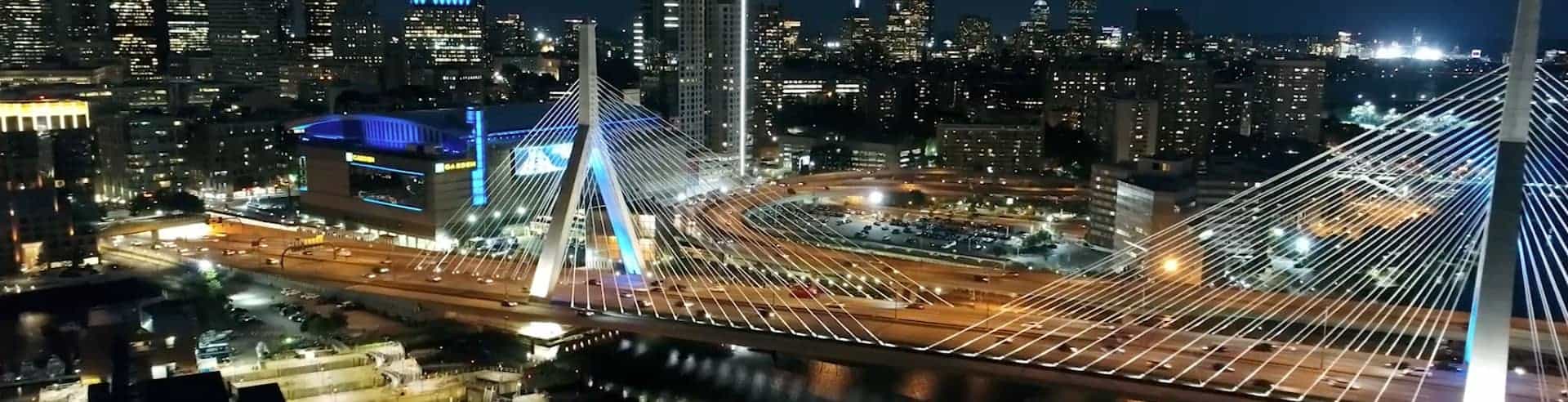
 Boston in 2026 is a city caught mid-thaw. Mortgage rates have settled into a new normal in the 6 percent range, the speculative lab-building frenzy of the early 2020s is digesting itself, and the median single-family home now lists near $857,000 — a number that would have seemed impossible to working-class Bostonians a generation ago. So when we ask what Boston real estate will look like ten years from now, the honest answer is: not as different as headlines suggest, but transformed in ways that matter enormously to anyone buying, building, or investing here.
By 2036, Boston will still be Boston. The brownstones of Beacon Hill will still anchor the luxury market. Kendall Square will still be the most valuable square mile in American life sciences. But the edges of the city — the neighborhoods, the building types, the industrial uses — will look meaningfully different. Here is how that decade is likely to unfold.
The Luxury Market: From Glass Towers to Jewel Boxes
The era of the 60-story residential glass tower is, for the moment, paused. Construction costs have made the math impossible at the high end, and Boston's most recent supertall projects — Winthrop Center and the South Station Tower — may end up looking like the last of their breed for a long time. By 2036, expect the luxury landscape to be defined by three quieter trends.
Branded residences and boutique towers. Instead of one tower with 400 units, developers will build 40-unit boutique buildings tied to hotel brands and private clubs. The flight to safety that defines today's luxury buyer — high-net-worth individuals parking liquid wealth in stable Boston real estate — does not require a 60th-floor view. It requires service, security, and scarcity.
The "jewel box" home. The high end of the suburban market has already turned away from 15,000-square-foot mega-mansions toward smaller, perfectly executed homes with chef's kitchens, primary suites on upper floors, accessory dwelling units for extended family, and turnkey finishes. By 2036, this preference will have remade entire suburban markets — Weston, Wellesley, Brookline, and the wealthier parts of Newton — toward 5,000 to 7,000 square feet of obsessive craftsmanship rather than raw scale.
The multi-generational compound. With housing costs effectively eliminating the starter home — only three Greater Boston municipalities had a median single-family price under $500,000 by the mid-2020s — adult children are returning home, aging parents are moving in, and luxury floor plans are responding. ADUs, dual primary suites, and connected guest houses will be standard in any home above $3 million by 2036. The nuclear family home is quietly being replaced.
Prices will still climb. A reasonable projection is that prime Boston luxury — Back Bay, Beacon Hill, Seaport, and the inner-ring luxury suburbs — will grow at 2 to 4 percent annually, putting median prime values 25 to 45 percent higher than today by 2036. Not a boom. A grind.
Neighborhoods Poised for Real Growth
Citywide averages are useful for headlines and useless for buyers. The interesting story is at the neighborhood level, and a few are positioned for genuine transformation by 2036.
Dorchester is the obvious answer, and the obvious answer is the right one. Boston's largest neighborhood by population and land area, with multiple Red Line stops, distinct sub-neighborhoods, and roughly 36,000 housing units of every conceivable type, Dorchester offers something almost no other Boston neighborhood does: real inventory at varied price points. The 15-minute walk corridors around Savin Hill, Fields Corner, and Neponset are quietly becoming the city's most active redevelopment zone. The Dorchester Avenue corridor — the "Dot Ave" plan — is in the middle of converting from industrial uses to mixed-use mid-rise housing, a transition that will largely be complete by 2036.
East Boston continues to surge for one reason and faces real risk for another. The reason: the Blue Line gets you downtown in under ten minutes, and the waterfront views are the cheapest in the city. The risk: East Boston is among the most climate-vulnerable neighborhoods in Greater Boston, with sea levels projected to rise nine inches by 2030. Expect a bifurcation by 2036 — newer elevated developments behind permanent flood infrastructure will trade at premium prices, while older ground-floor stock could see insurance and resale challenges.
Roxbury and the Nubian Square corridor represent the most contested transformation. The Imagine Boston 2030 plan identified Nubian Square (formerly Dudley Square) as the city's largest opportunity zone, with significant public investment already committed. The decade ahead will determine whether this delivers genuinely mixed-income development or another wave of displacement. The historic architecture, Fort Hill's elevation, and proximity to Longwood Medical and downtown make the underlying real estate logic almost too strong to resist.
Hyde Park and Roslindale are the value plays inside city limits. Both have commuter rail access, strong school options, and prices that — in 2026 — remain meaningfully below citywide averages. By 2036, expect these neighborhoods to look much more like Jamaica Plain looks today.
Beyond Boston proper, the gateway cities are the real story. Chelsea, Everett, Lynn, Quincy, and Revere are entering the kind of decade Somerville had between 2010 and 2020. The arrival of South Coast Rail has already turned Fall River and New Bedford into viable Boston commuter markets. By 2036, the practical boundary of "Greater Boston" will have stretched further south and north than most current residents expect.
The Industrial Picture: Beyond the Lab Hangover
Boston's industrial real estate story for the next decade is, paradoxically, the recovery from a story that already happened. Between roughly 2021 and 2024, developers added almost 18 million square feet of new lab space across the region — a 57 percent increase, driven by pandemic-era biotech enthusiasm and venture capital that has since pulled back hard. Vacancy rates approached or exceeded 25 percent in some submarkets by 2025.
That overhang will define industrial real estate for the first half of the decade. By 2036, expect the picture to look very different.
Kendall Square stays Kendall Square. New build-to-suit projects for AstraZeneca, Eli Lilly, Takeda, Moderna, and Foundation Medicine were already under construction in the mid-2020s. East Cambridge is structurally constrained — only so much land exists, MIT controls a meaningful share of it, and demand from large pharma has not gone away. Rents in the very best Kendall Square buildings will continue to set national records.
The lab corridor extends and consolidates. Speculative second-tier lab buildings will get repositioned. Some will be converted to housing or office. Others — particularly in Watertown, the Somerville Inner Belt, Boston Landing, and along the Seaport's edges — will eventually fill as venture funding cycles back. By 2036, lab-adjacent neighborhoods like Allston-Brighton, especially around Harvard's Enterprise Research Campus and Beacon Yards, will be recognized as genuine biotech submarkets in their own right.
Last-mile logistics quietly takes over old industrial. The unsexy story of the next decade is the conversion of older warehouse, rail-adjacent, and light-industrial parcels in Chelsea, Everett, the Inner Belt, and Readville into modern distribution and last-mile fulfillment facilities. These uses generate fewer headlines than biotech but more truck traffic, more land absorption, and more durable rents.
Climate-driven construction becomes its own industry. Boston has 47 miles of coastline, and roughly $850 million in resiliency projects are needed in the Seaport alone. Sea walls, elevated land, flood pathways at Long Wharf and Moakley Park, and the federal-state Coastal Storm Risk Management Study will combine to make climate-adaptation construction one of the largest sustained construction sectors in the city through 2036.
What Could Knock This Off Course
Three risks deserve naming. A sustained recession would compress everything — luxury, lab, and gateway markets all soften together when capital pulls back. A serious climate event — a 100-year storm landing on a high tide — could pull forward years of insurance repricing and zoning change in a single news cycle. And a sharp policy shift on housing supply, whether at the city or state level, could either accelerate development or further entrench scarcity. Predictions assume a roughly continuous trajectory; the real world rarely cooperates.
The Bottom Line for 2036
A decade from now, Boston will still be the most stable major real estate market in the country. The luxury tier will be smaller, more boutique, and probably more expensive in real terms. The middle of the market will continue to push outward, with Dorchester, East Boston, Hyde Park, Roslindale, and the gateway cities of Chelsea, Everett, Lynn, and Quincy carrying the actual growth. The industrial story will pivot from speculative lab building to climate adaptation, last-mile logistics, and a more disciplined biotech expansion anchored in Kendall Square but extending further into Allston, Watertown, and Somerville.
It is not a city that will be unrecognizable in 2036. It is a city that will reward people who paid attention to the edges.
Sources informing this analysis include the Boston Globe's December 2025 housing market analysis, Boston Indicators' Greater Boston Housing Report Card, Climate Ready Boston neighborhood plans, and reporting from Banker & Tradesman, Bisnow, MassBio, and the Boston Planning & Development Agency. All forward-looking statements are projections based on current trends and should not be treated as guarantees.