

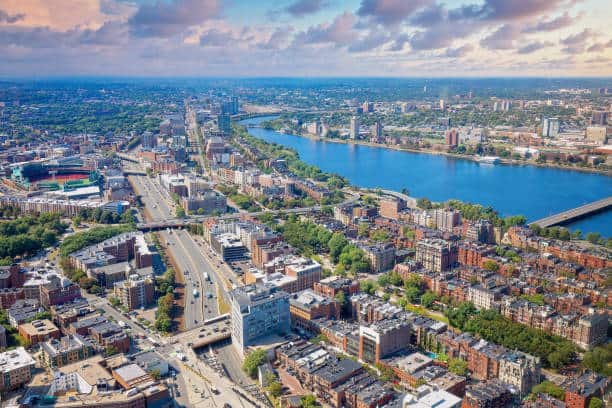
 Boston's affordable housing crisis has reached an inflection point. More than half of Boston renters are now cost-burdened — paying over 30% of their income on housing — and one in four renters spends more than half of their entire paycheck on rent. At the same time, new construction has slowed, rent control is back on the ballot for the first time in over three decades, and state-level reforms like the MBTA Communities Act and the Affordable Homes Act are beginning to reshape what gets built, where, and for whom.
This guide walks through where Boston affordable housing stands in 2026, the major policy battles shaping the next year, and what it all means for renters, homeowners, and developers.
The Scale of the Problem
Boston has long ranked among the most expensive rental markets in the country. According to the 2025 Greater Boston Housing Report Card from the Boston Foundation, the region is the fifth most-expensive rental market, trailing only New York, San Jose, San Francisco, and San Diego. Greater Boston's rental vacancy rate was just under 3% in 2024, and supply constraints have continued into 2026.
A few numbers put the pressure in context:
-
Average Boston rent (all units): roughly $3,638 per month
-
Back Bay average rent: $4,787 per month
-
Mattapan average rent: $2,240 per month — still well above what most lower-income households can afford
-
Boston renter-occupied share: 65% of households rent; only 35% own
-
Cost-burdened renters: more than 50% of Boston renters pay over 30% of income on housing
The root cause is well understood: Boston is not building enough housing to match demand. New housing permits in the region averaged about 13,000 units annually in the 2010s, but they have fallen off in the current decade. Boston's own administration set a goal of 13,000 new housing units for the 2022-25 period and undershot it, permitting only 11,804 units over those four years.
Rent Control: The 2026 Ballot Fight
The biggest affordable housing story in Massachusetts in 2026 is the statewide rent control ballot measure. For the first time since 1994 — when voters narrowly banned rent control — Massachusetts voters may decide in November 2026 whether to allow it again.
What the Ballot Measure Would Do
The proposed measure would cap annual rent increases across the state at 5% or the Consumer Price Index, whichever is lower. Key details:
-
Exemptions: owner-occupied buildings with four or fewer units, and construction less than 10 years old
-
Additional carveouts: public housing, nonprofits, and short-term rentals
-
Signatures collected: over 124,000, nearly 50,000 more than required
-
Legislative deadline: voters will only weigh in if the state Legislature doesn't pass related legislation by May 5, 2026
-
Voter support: a Boston Globe/Suffolk University poll conducted in November 2025 found 63% of voters favor the measure
Who Supports It
-
Homes for All Massachusetts / Keep Massachusetts Home, the coalition of tenant advocates, unions, and progressive groups driving the ballot effort
-
A majority of Boston City Council, which voted 9-3 in favor of a resolution supporting the measure
-
Boston Mayor Michelle Wu, who announced in February 2026 that she would vote yes: "It's not perfect, and it's not what the City of Boston put forward as a balanced proposal for our city … but I'm not going to let the perfect be the enemy of the good in this case, when there is so much urgency and pressure from housing costs on our residents"
Who Opposes It
-
Governor Maura Healey, who has publicly opposed the measure
-
Twelve Massachusetts mayors, led by those outside Boston, who argue a statewide cap could worsen the housing crisis by further dampening already-scarce new construction
-
The Greater Boston Real Estate Board, statewide realtor associations, and commercial real estate developers, who call the proposal "the most restrictive rent control program" in the country
-
Housing for Massachusetts, a real estate-backed group that has filed a lawsuit to challenge the measure
Where Wu Stands
Wu's position has evolved. She initially pushed her own Boston-only proposal in 2023 that would have capped rent increases at CPI plus 6%, up to a maximum of 10% — significantly less restrictive than the current ballot measure. That plan died in the State House. Wu has consistently said she would prefer a "pure, local option" that lets each city decide, because "the conditions can be quite different in each municipality." But facing a binary ballot choice in November, she has endorsed the statewide cap as the best available option.
What Passage Would Mean
If the rent control measure passes in November 2026:
-
Most pre-2016 buildings would fall under a 5%-or-CPI annual cap
-
New construction less than 10 years old would remain exempt, preserving incentives for developers to continue building
-
Small owner-occupied buildings (four units or fewer) would be exempt, protecting the three-decker housing stock that defines many Boston neighborhoods
-
Operating assumptions would change overnight for most existing multifamily owners, likely leading to cap rate expansion of 25-75 basis points as buyers reprice policy risk
The Affordable Homes Act: $5 Billion Worth of Policy
Beyond rent control, the most consequential state-level housing policy is the 2024 Affordable Homes Act. The law dedicated over $5 billion to production, preservation, public housing repairs, and advances on accessory dwelling units (ADUs), commercial-to-residential conversions, and mixed-income projects on surplus public land.
Key provisions driving Boston affordable housing in 2026:
-
ADU legalization statewide, allowing homeowners to add an accessory dwelling unit to single-family properties as of right
-
Funding for public housing preservation, addressing decades of deferred capital needs
-
Support for commercial-to-residential conversions, critical in a city with 18.2% office vacancy and a housing shortage
-
Mixed-income development on surplus public land, unlocking state and municipal parcels for new housing
The MBTA Communities Act: Unlocking Transit-Oriented Housing
The 2021 MBTA Communities Act requires 177 transit-served municipalities to zone at least one as-of-right multifamily district near stations, with a minimum density of 15 units per acre. Eligibility for key state grants depends on compliance, which effectively legalizes transit-oriented density across much of Greater Boston.
Several towns must reach compliance by January 2026, and early results are encouraging. A January 2026 report found 102 developments underway in MBTA communities, totaling just under 7,000 units. Many of these developments would not occur absent the state law, though in total they still represent a modest housing increment in a large metropolitan area.
What This Means for Affordability
The MBTA Communities Act matters for affordable housing because:
-
Most new supply adds rental inventory near transit, where lower-income workers benefit most from reduced transportation costs
-
Inclusionary zoning at the municipal level typically applies to these projects, producing income-restricted units
-
Zoning reforms are facilitating rental development in first-ring suburbs with vacancy rates of 4% or lower, such as East Middlesex County, Quincy, and Waltham-Newton-Lexington
Boston's Inclusionary Zoning and 2025 Housing Strategy
Boston operates under its own zoning system, requiring affordability in most midsize and larger projects through an inclusionary program. The city has raised set-aside rates and deepened area-median income targets. It is also systematically upzoning and reducing parking requirements near rapid transit through its 2025 Housing Strategy and "complete neighborhoods" rezonings.
The 2025 Housing Strategy focuses on:
-
Deeper affordability through larger inclusionary set-asides, reaching lower AMI bands
-
Upzoning along transit corridors to unlock new supply
-
Parking reform to reduce construction costs and free land for housing
-
Faster permitting for affordable projects
Downtown Boston rezoning, which allows buildings up to 700 feet in designated areas, also creates significant opportunity for office-to-residential conversion — a path that could add thousands of units to the affordable housing pipeline over the next several years.
What's Working, What's Not
What's Working
-
State-level zoning reform is slowly but measurably increasing the supply pipeline, particularly in suburban municipalities
-
The Affordable Homes Act's ADU provision is unlocking a new class of small-scale housing production
-
Commercial-to-residential conversion interest is growing as Boston's office vacancy remains elevated
-
Multifamily delivery — while concentrated in market-rate product — is keeping metro vacancy above 7% and moderating rent growth
What's Not Working
-
Production still lags target. Boston undershot its own 13,000-unit 2022-25 goal, permitting only 11,804 units
-
Class C vacancy remains tightest — the submarket that serves the most cost-burdened renters is the hardest to find
-
Luxury construction dominates the pipeline, though the share of new deliveries classified as 3-star properties is rising, signaling a gradual move away from the predominantly luxury-focused construction of earlier cycles
-
Rent control uncertainty is chilling investment in existing multifamily even before any vote, as investors delay acquisitions pending ballot results
What to Watch for the Rest of 2026
-
May 5 legislative deadline. If the Legislature passes a negotiated rent stabilization compromise before May 5, the ballot question is removed from the November ballot. Watch for a compromise bill that includes a higher cap, more exemptions, or a local-option framework.
-
November 2026 ballot results. If no compromise is reached, voters will decide directly. Polling currently favors passage.
-
MBTA Communities Act compliance. More towns must comply by January 2026, and enforcement challenges will continue to play out in court and at the ballot box.
-
Office-to-residential conversions. Expect significant Downtown announcements following the 700-foot rezoning. Each successful conversion represents hundreds of potential new units.
-
Federal housing policy. The Federal Housing Finance Agency increased agency multifamily loan purchase caps for 2026, supporting continued financing availability for income-restricted and workforce housing projects.
The Bottom Line
Boston's affordable housing crisis is not getting dramatically better in 2026, but the policy environment is moving — in some cases significantly. Between the rent control ballot fight, the MBTA Communities Act, the Affordable Homes Act, and Boston's own inclusionary zoning reforms, 2026 will define what Boston housing looks like for the next decade.
For renters, the near-term outlook is a slightly softer market — metro vacancy is up, new supply is still landing, and rent growth has moderated. For developers, the outlook is more uncertain, with rent control risk weighing against real policy tailwinds for new construction near transit. For policymakers, the challenge is squaring two things that are in real tension: protecting current renters from displacement while maintaining the production pipeline that any long-term affordability solution requires.
Frequently Asked Questions
Is rent control coming back to Massachusetts in 2026?
Possibly. A statewide rent control ballot measure would cap annual increases at 5% or CPI, whichever is lower, with exemptions for owner-occupied 4-unit-or-smaller buildings and new construction less than 10 years old. The measure will appear on the November 2026 ballot unless the Legislature passes related legislation by May 5, 2026. Polling currently shows 63% of voters in favor.
What is the MBTA Communities Act?
The MBTA Communities Act is a 2021 Massachusetts law requiring 177 transit-served municipalities to zone at least one as-of-right multifamily district near stations at a minimum density of 15 units per acre. As of January 2026, 102 developments totaling nearly 7,000 units are underway under the law.
How much affordable housing is Boston building in 2026?
Boston's own 2022-25 goal was 13,000 new housing units; the city permitted 11,804 over that four-year period. New construction in 2026 is slowing metrowide, though the share of 3-star (middle-market) properties in the pipeline is rising, up to nearly 40% of units underway.
What can renters do to find affordable housing in Boston?
Renters should explore Boston Housing Authority programs, the Boston Metro List for income-restricted units, Section 8 vouchers, and MassHousing's affordable rental database. Neighborhoods like Mattapan ($2,240 average rent), Roxbury ($2,589), and West Roxbury ($2,664) remain more affordable than the citywide $3,638 average, and the MBTA Communities Act has increased inventory in first-ring suburbs like Quincy and Waltham.
Who is most affected by Boston's affordability crisis?
More than half of Boston renters are cost-burdened (paying over 30% of income on housing), and one in four renters pays more than half of their paycheck on rent. Lower-income households, seniors on fixed incomes, and essential workers — teachers, healthcare workers, service workers — are most exposed.
For more information on Boston housing policy, market updates, or affordable housing opportunities, [contact our team] for monthly updates.