
 There's a conversation I keep having with luxury homeowners across Boston — in the Back Bay, in the Seaport, in Brookline, in Newton — and it follows a familiar pattern. They tell me they're thinking about selling, but they want to wait a little longer. Wait for rates to come down. Wait for the market to feel more certain. Wait for the right moment.
What I try to explain every time is that in the Boston luxury market right now, waiting is not a neutral choice. It has a cost. And that cost is becoming more real by the month.
Here's what I mean. If you own a luxury property in this city — a Back Bay townhouse, a Seaport penthouse, a high-end condo in Beacon Hill, a single-family in Chestnut Hill or Wellesley — your competition has never just been other sellers. Your competition has also been new construction. The pipeline of new luxury product coming to market is what sets the ceiling on what buyers are willing to pay for resale homes. And right now, that pipeline has effectively frozen.
Construction costs in Boston have gone through the roof. The math for building a new luxury high-rise in this city — the kind of glass tower that gave the Seaport its skyline over the last decade, that produced buildings like Winthrop Center and the towers rising above South Station — that math no longer works. When you factor in the cost of materials, labor, permitting, and financing, developers cannot make the numbers pencil on new groundbreakings right now. The result is that the luxury new construction pipeline in Boston is running out. What's currently under construction will deliver, and then there's a gap. A real supply gap that could last years.
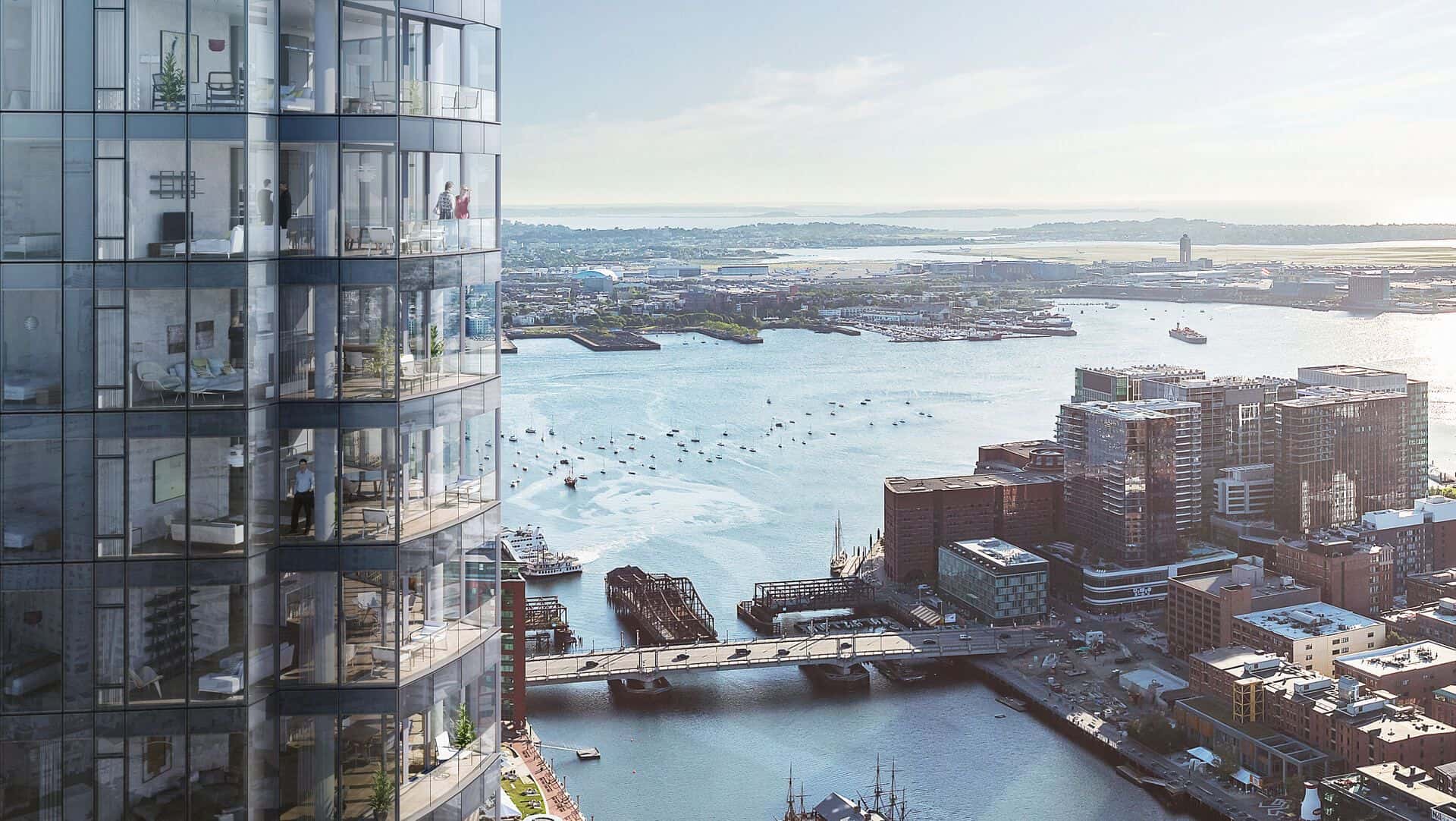
The Seaport is the clearest example of what this means for sellers. Over the last ten years, the South Boston waterfront transformed from a post-industrial parking lot into one of the most coveted addresses in New England. Buildings like the St. Regis Residences, Echelon, and One Harbor Shore on Fan Pier reshaped what luxury living meant in Boston — and they also created real competition for resale sellers. If you were selling a Seaport condo in 2022 or 2023, a buyer could look at your unit and also look at brand-new inventory coming to market. That comparison directly affected your pricing power.
That dynamic is now shifting in a fundamental way. The projects currently under construction — One Harbor Shore being the most prominent, expected to deliver this coming August — represent what those who know this market best are calling the last of this development cycle. Once those units are absorbed, the pipeline behind them is essentially empty. There are no major luxury groundbreakings on the horizon in the Seaport or the downtown core that would bring significant new supply to market in the next few years. If you own a resale luxury property in that neighborhood, you are about to lose your competition. In real estate, losing your competition is a very good thing.
The Back Bay and Beacon Hill tell an even more dramatic version of this story, because in those neighborhoods, the supply constraint isn't cyclical — it's structural and permanent. There's no land for a 30-story tower on Newbury Street. There's no permitting pathway for large-scale new construction in one of the most architecturally protected neighborhoods in the country. The inventory in the Back Bay has always been finite — brownstones, rowhouses, converted condos — and that scarcity has been the foundation of its value for generations. The question isn't whether your Back Bay townhouse is worth selling. The question is whether you're choosing to sell it at a moment when buyers recognize the full weight of what it is.
And the buyers who are active in Boston's luxury market right now are recognizing exactly that. In 2026, luxury buyers aren't entering this market because rates suddenly got great or because the economic headlines turned rosy. They're buying because they are looking for stability in a world that feels genuinely uncertain. The stock market is swinging. Global policy is unpredictable. And Boston real estate, historically, has been one of the most stable stores of value you can find anywhere. We're talking about a market where single-family home values have risen 163% over the last two decades. The buyers shopping in the two, three, and five million dollar range right now are sophisticated people who are making wealth preservation decisions, not just lifestyle decisions. And Boston — with its concentration of world-class hospitals, universities, and employers — is exactly where that kind of capital wants to go.
What this means for you as a luxury seller is that the buyers currently active in this market are genuinely motivated. They're not casually browsing. They're not waiting for a better deal to appear. They are ready to move. And the inventory they're competing over — in neighborhoods like the South End, the Seaport, the Back Bay, Newton, Brookline, and Wellesley — is not being replenished at a pace that gives them comfortable alternatives. When a well-prepared luxury home hits the market right now in one of those neighborhoods, priced correctly and presented well, the right buyer is often already waiting for it.
The window I'm describing isn't open indefinitely. Construction costs will eventually normalize. New development will become feasible again. A new cycle of supply will come to market. And when it does, the leverage that luxury sellers have today — born of genuine scarcity, motivated capital, and a frozen development pipeline — will erode. I'm not suggesting anyone make a rushed decision. I'm suggesting you pay close attention. Because the sellers who look back at 2026 as the year they made a smart move are going to be the ones who understood what was happening in their city before it became obvious to everyone else.
If you own a luxury property anywhere in Greater Boston and you've been sitting on the fence, this is one of the most important conversations you can have right now. Not because I want to rush you into anything — but because this market, this specific moment, this supply situation, these buyers — it is not permanent. The people who recognize that early are the ones who win. I'd love to talk through what your property is worth and what a sale could look like for you in this environment. I think the answer might genuinely surprise you.